Why You Feel Like You Know Your Favorite Creator Personally — And What That Actually Does to Your Brain
Here's a scenario that might feel uncomfortably familiar: your favorite YouTuber posts a video about going through a breakup, and you find yourself genuinely upset for them. Not in a vague, "aw that's sad" way — but in the way you'd feel if a friend texted you the same news. You might even think about it later that day. Maybe you leave a comment. Maybe you tell someone about it in conversation like it happened to someone you actually know.
If that sounds like you, first of all — you're not weird. You're incredibly normal. And second of all, what you're experiencing has a name: a parasocial relationship. And it's worth understanding, because it affects more of us than we'd probably like to admit.
So What Actually Is a Parasocial Relationship?
The term was coined back in 1956 by sociologists Donald Horton and Richard Wohl, who were studying how television audiences related to on-screen personalities. They noticed that viewers began to feel genuine emotional bonds with TV hosts — people they'd never met and who had no awareness of their existence. The relationship was entirely one-sided in terms of actual interaction, but it felt mutual to the viewer.
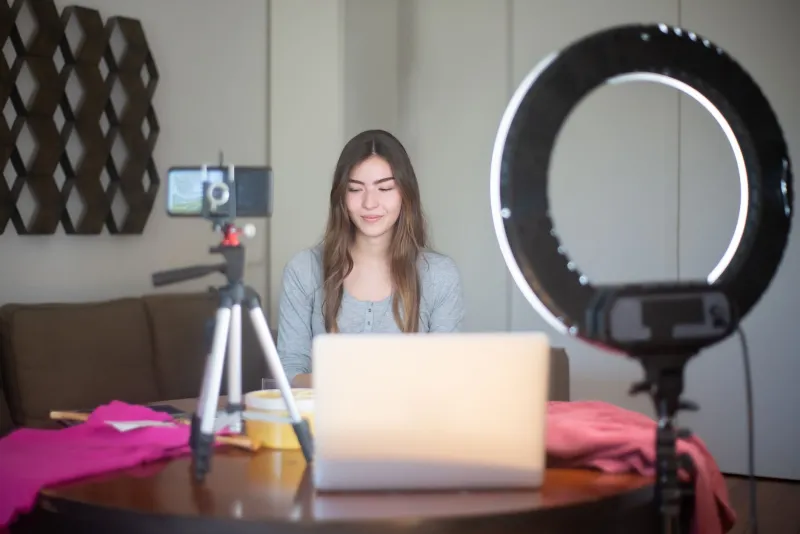
Fast-forward to 2025, and the conditions for parasocial bonding have become almost scientifically perfect. Content creators don't just appear on your screen for thirty minutes a week like a sitcom character — they're in your earbuds during your commute, they're on your For You Page while you're eating breakfast, they're doing Instagram Lives from their beds at 11 p.m. The intimacy of the format is unprecedented.
When a creator talks directly into a camera, makes eye contact with the lens, and says "okay, so you guys know I've been going through it lately" — your brain processes that as a real social interaction. Because evolutionarily, that's what it looks like.
The Brain Doesn't Distinguish as Well as You'd Think
Here's where it gets genuinely fascinating: neuroscience research suggests that the same neural pathways activated by real social connection are also triggered by parasocial interaction. When you feel understood by a creator — when they say something and you think yes, that's exactly it — your brain releases some of the same feel-good chemicals it would in a real friendship moment.
This isn't a design flaw. It's just your brain doing its job with the social stimuli it's given. The problem is that the output of parasocial relationships doesn't match the input. You invest emotional energy, time, and sometimes money into a relationship that, from the other side, doesn't exist in the same form.
That asymmetry is where things can get complicated.
The Real Upsides (Because There Are Genuinely Good Ones)
Before we get into the messier territory, let's be honest about something: parasocial relationships aren't inherently harmful. For a lot of people, they're actually really meaningful.
For someone who's isolated — whether due to social anxiety, disability, geography, or life circumstances — having a creator they feel connected to can genuinely reduce loneliness. Research published in the Journal of Social and Personal Relationships found that parasocial interactions can fulfill basic needs for belonging, especially for people who struggle with face-to-face socialization.
There's also the community dimension. Being a fan of someone — a creator, a musician, an athlete — often leads to finding real human connections through shared enthusiasm. You meet people in comment sections, fan Discord servers, Reddit threads. The parasocial relationship becomes a gateway to actual social ones. That's not nothing. That's actually kind of beautiful.
And then there's the inspiration factor. A lot of people — including plenty of creators — point to someone they admired from afar as the reason they started creating themselves. Parasocial connection can be genuinely motivating.
Where It Gets Complicated
Okay, but. Here's where we have to get honest.
Parasocial relationships become psychologically risky when they start substituting for real connection rather than supplementing it. When you're turning down social plans because you'd rather watch a creator's stream. When a creator's bad day genuinely derails yours in a significant way. When you find yourself defending a creator's harmful behavior with the same intensity you'd use to defend a close friend.
That last one is particularly worth sitting with. One of the stranger byproducts of parasocial attachment is that fans often extend the same loyalty — and the same defensive instincts — to creators that they would to people they actually know. Which means that when a creator does something genuinely problematic, their most parasocially attached fans are often the last to acknowledge it.
We've seen this play out publicly over and over. Creators who've done real harm have been protected by fandoms who felt, on a deep emotional level, that this couldn't be true because they knew this person. Except they didn't. They knew the curated, performed version of this person that exists on camera.
The gap between the persona and the person is something creators themselves don't always manage ethically. There's a real incentive in the creator economy to manufacture intimacy — to seem more vulnerable, more accessible, more "real" than you actually are — because it drives engagement and loyalty. Some creators are genuinely authentic. Others are performing authenticity. And from the outside, those two things can look identical.
Keeping Your Fandom Healthy in the Age of Always-On Content
None of this means you need to feel bad about loving a creator's content or feeling connected to their work. It just means approaching that connection with a little self-awareness.
A few things that actually help:
Notice the asymmetry. Your favorite creator doesn't know you. That's not a sad thing — it's just a true thing. Holding that awareness doesn't diminish the enjoyment; it just keeps expectations realistic.
Check your investment. If a creator's behavior, mood, or personal drama is consistently affecting your emotional state in a significant way, that's worth paying attention to. It might be a signal to diversify where you're putting your social energy.
Appreciate the craft, not just the persona. Separating what someone makes from who they are is a healthy habit. You can love a creator's content and still acknowledge that you don't actually know them as a person.
Use fandom as a bridge, not a destination. The communities that form around creators can be genuinely wonderful. Lean into those real human connections when they show up.
At TerrabyTrishla, we talk about creators, celebrities, and entertainment constantly — because we genuinely love this world. But part of loving it responsibly is being honest about how it works and what it does to us. The parasocial pull is real. It's human. And it's worth understanding.
Because the best kind of fan is one who can enjoy the show and keep perspective on what it is.
This is the kind of conversation Trishla's always down for. Got thoughts? Drop them — the comment section is very much a judgment-free zone.