The 'Real Me' Is a Brand Deal: How Authenticity Became the Internet's Most Expensive Performance
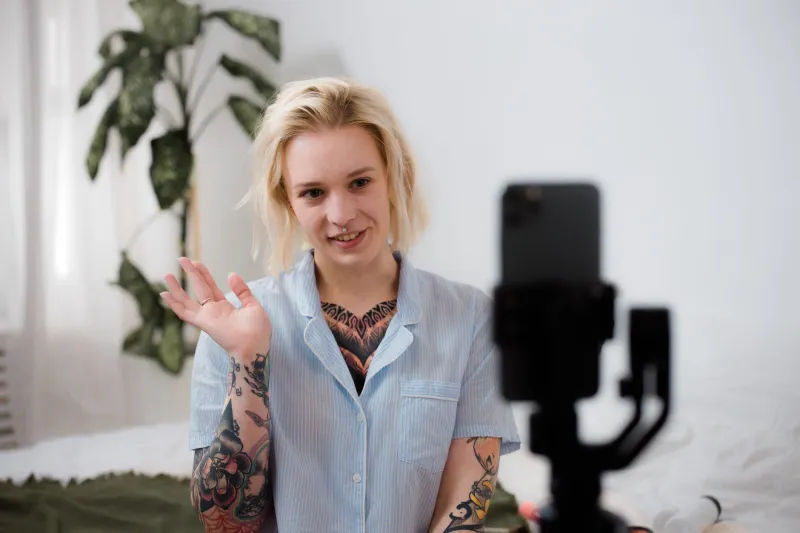
Somewhere between the "no makeup" selfie that took forty-five minutes to light correctly and the "raw and honest" YouTube video that was scripted, filmed, re-filmed, professionally edited, and then released on a Tuesday at 2pm for optimal algorithmic performance — we lost the plot on what authenticity actually means.
I say this with full awareness that pointing out the performativeness of "authentic" content is itself a kind of performance. Everything on the internet is a little bit of a hall of mirrors right now. But the particular mirror I want to look at today is the one where creators have convinced themselves — and sometimes their audiences — that strategically revealing their flaws is the same thing as being real.
It is not. And the gap between those two things is worth talking about.
The Authenticity Economy and How We Got Here
For most of entertainment history, polish was the point. You didn't see celebrities without their makeup on. You didn't hear musicians mess up a note. The whole apparatus of fame was built on projection — carefully constructed images of perfection that audiences could aspire to and admire from a safe distance.
Then the internet happened, and then YouTube happened, and then a generation of regular people built massive audiences not by being flawless but by being relatable. The creator economy's foundational promise was essentially: I'm just like you, except you're watching me.
For a while, that was genuinely true and genuinely refreshing. Early vloggers really were just filming their lives with whatever camera they had. The messiness was real because there was no infrastructure yet to make it not real.
But then the money showed up. Sponsorships. Brand deals. Merch. Suddenly there were teams and managers and content strategies and the pressure to maintain an audience that had been built on the premise of "just a regular person." The authenticity that built the platform became a product that had to be manufactured. And that's where things got complicated.
The Crying Video Industrial Complex
Let's talk about the emotional vulnerability content pipeline, because it is genuinely one of the most fascinating and strange phenomena in modern media.
At some point, creators discovered that videos where they cried, confessed, or revealed something painful performed exceptionally well. Audiences responded to vulnerability with loyalty. Algorithms responded to high watch time and emotional engagement. The incentive structure was set.
Now, I want to be careful here because some of this content is completely genuine. Creators who talk about mental health struggles, grief, or difficult life experiences are often doing something valuable — destigmatizing conversations that people feel alone in. That's real and it matters.
But there's another version of this that is, if we're being honest, a little calculated. The crying video that arrives suspiciously close to a controversial moment the creator needs to get ahead of. The "I've been struggling" post that precedes a brand relaunch by exactly two weeks. The "no filter" photo that is very clearly filtered.
The tell, usually, is in the resolution. Genuine vulnerability doesn't tend to come pre-packaged with a lesson, a merch link in the bio, and a perfectly timed comment pinned to the top saying "I'm so proud of you for sharing this." Real messy feelings are messier than that.
Imperfection as Aesthetic
One of the most interesting evolutions in this space is the way "imperfection" has been aestheticized to the point where it's indistinguishable from any other carefully curated visual identity.
The wobbly handheld camera shot that took three takes to get right. The "I just woke up" content that required a 6am alarm and a ring light. The deliberately lo-fi production quality on a channel that absolutely has the budget for better — because the lo-fi is the brand. The "I don't care what I look like" look that has its own skincare routine, its own specific undone-hair technique, its own lighting setup.
None of this is necessarily bad. Aesthetic choices are aesthetic choices. But when the claim is authenticity and the reality is a highly designed approximation of authenticity, we've wandered into a weird space where the most calculated thing a creator can do is pretend they're not calculating anything.
And audiences, for the most part, know this. The comment sections know. People aren't as naive as creators sometimes seem to hope. What's interesting is that a lot of fans seem to have made a kind of peace with it — they enjoy the performance of authenticity even knowing it's a performance. It's like watching a magic show after you've learned how the tricks work. You still enjoy it. But the experience is fundamentally different.
The Creators Who Are Actually Getting It Right
Here's the thing: genuine authenticity does still exist online. It just looks different from what the algorithm rewards.
It looks like a creator who says "I don't want to talk about that yet" instead of releasing a carefully prepared statement about it. It looks like someone who takes a real break from posting and doesn't film a video about taking a break. It looks like admitting uncertainty without wrapping it up in a three-point growth arc by the end of the video.
It looks, sometimes, like being a little boring. Like not having a lesson. Like not performing your own healing for an audience that's waiting to applaud.
The creators who manage to hold onto something genuinely unperformed are, in my experience, the ones who treat their audience as people rather than as a metric. They share because they want to share, not because the content calendar says it's time for a vulnerable moment. You can feel the difference, even if you can't always articulate it.
What We're Actually Asking For
When audiences demand authenticity from creators, I don't think they actually mean "show me everything." I think they mean "don't lie to me." There's a difference between privacy and performance. A creator who keeps parts of their life genuinely private isn't being inauthentic. A creator who manufactures the appearance of openness while carefully controlling every single thing you see? That's where the trust starts to erode.
The irony is that the authenticity arms race has made it harder, not easier, to find creators who feel genuinely honest. When everyone is performing realness, realness becomes almost impossible to recognize.
Maybe the most authentic thing a creator could do right now is just... stop explaining how real they are. Show up. Make the thing. Let it be what it is. The audience will figure out the rest.
We usually do.