Fandom or Full Takeover? When a Creator Becomes Your Whole Entire Life
Okay, But When Did This Become Your Whole Personality?
Let's be real for a second. We've all had a creator phase. Maybe you binged someone's entire back catalog in a weekend, set up post notifications, or found yourself casually quoting their catchphrases in conversation. That's pretty normal fan behavior in 2024. The internet is basically built on parasocial connection at this point.
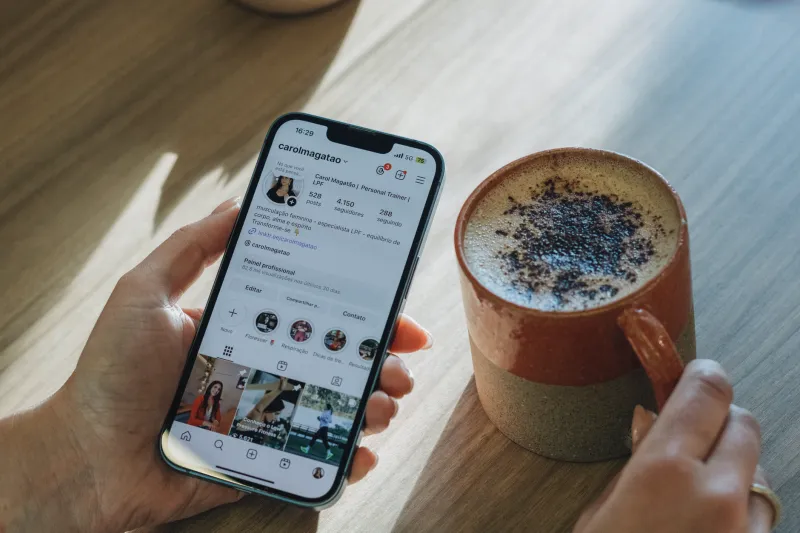
But there's a version of fandom that goes a little further than that — and honestly, it's worth talking about. We're talking about the people who've restructured their actual lives around a single creator. Their morning routine starts with checking if a new video dropped. Their friend group is entirely made up of people they met in that creator's Discord server. Their social media presence exists almost exclusively to engage with, quote, and defend that one person.
At what point does passionate fandom stop being a personality trait and start being a personality replacement?
The Algorithm Made It Too Easy
Here's the thing — platforms are specifically designed to feed obsession. YouTube's autoplay, TikTok's For You page, Twitch's live notification system — all of it is engineered to keep you in a creator's orbit as long as possible. When you're consuming someone's content daily, sometimes multiple times a day, your brain genuinely starts to process that relationship as meaningful. Psychologists call this a parasocial relationship, and it's not inherently bad. Feeling connected to a creator you enjoy is completely human.
The problem shows up when the parasocial starts crowding out the actual social.
One fan — we'll call her Dani, a 24-year-old from Ohio — described spending nearly four hours a day across a single lifestyle creator's content and community spaces. "I'd wake up and immediately check if she'd posted a Story. My lunch break was for catching up on her podcast. I was in the fan Discord basically all evening," she told me. "My real-life friends started joking that I was 'busy with my parasocial girlfriend.' And honestly? They weren't wrong."
Dani eventually stepped back after realizing she hadn't made plans with non-fandom friends in over two months. "It snuck up on me," she said. "It never felt like a problem because it felt like community. But it was community entirely centered on someone who had no idea I existed."
The Super-Fan Identity Trap
Part of what makes this pattern so sticky is that fandom communities offer something genuinely valuable: belonging. If you're a huge fan of a creator, there are thousands of other people who get exactly why you love that person. That's a powerful social glue. Fan accounts, group chats, subreddits, Discord servers — these spaces can feel like the most understood you've ever been.
But there's a quiet trade-off happening inside those communities. The shared identity isn't really yours — it's borrowed from the creator at the center. Your whole sense of belonging hinges on continuing to love that one person, engaging with their content, and staying active in spaces built around them. The moment you start losing interest, or the creator does something you don't vibe with, the entire social scaffolding can wobble.
That's a fragile foundation for a social life.
Marcus, a 29-year-old from Atlanta, found this out when his favorite gaming creator went through a public controversy. "I'd been in that community for three years. My best online friends were all from that server. And then when the drama hit, the whole server imploded — people taking sides, people leaving. I lost like five friendships in a week because the thing holding us together just... fell apart." He paused. "That was the moment I realized I'd outsourced too much of my social life to someone else's brand."
The Upload Calendar as a Life Organizer
Another pattern that comes up again and again is scheduling personal time around a creator's posting habits. This sounds harmless — and in small doses, it kind of is. You want to watch a creator's Friday video on Friday night, so you keep Friday evenings free. Fine. Relatable, even.
But for some fans, it escalates. Plans get declined because a creator is going live. Vacations feel stressful because you'll miss content in real time. Relationships with partners or friends get strained because you're perpetually half-present, waiting for a notification.
Dr. Emily Lembke, a social psychologist who has written about digital attachment patterns, describes this as "availability mirroring" — where a fan unconsciously structures their own availability around a creator's schedule as if it were a reciprocal relationship. "The brain doesn't always distinguish well between a mutual relationship and a one-directional one," she explains. "When you're consuming someone's content consistently, your nervous system can start treating their presence as something you need to show up for."
So, How Do You Actually Step Back?
The tricky part about this kind of fandom is that it doesn't feel like a problem from the inside. It feels like passion. It feels like community. It feels like you've just found your people.
But if you've ever caught yourself irritable when a creator doesn't post on schedule, if you've skipped real-world events to be online for a livestream, or if your entire social media presence is basically a fan account for one person — it might be worth asking some honest questions.
Dani's turning point was a simple but brutal inventory: she listed every person she'd had a real conversation with in the past month. "Almost all of them were people I knew through the fandom. And the conversations were almost always about her. That was a wake-up call."
Her approach to stepping back wasn't dramatic — she didn't rage-quit the fandom or unfollow everyone. She just made a conscious rule: one piece of that creator's content per day, max. She started saying yes to plans that would've previously conflicted with livestreams. She joined a book club that had nothing to do with the internet.
"I still love her content," Dani said. "But now it's like... a snack, not a meal. I have an actual life that exists separately from her upload schedule. It took work to get there, but it's so much better."
Fandom Is Fun — Until It Isn't
None of this is about shaming people for loving a creator. Honestly? The parasocial economy runs on that love, and there's something genuinely beautiful about feeling connected to someone's art or personality from across the internet.
But your life — your actual, offline, fully-dimensional life — deserves to be the main character of its own story. A creator can be a supporting role. They can be the soundtrack to your mornings or the thing you look forward to on a slow Tuesday. That's wonderful.
Just maybe don't let them be the whole show.